
Tate County Arrest Records and Court Charges
An arrest record in Tate County is the law enforcement record of a person taken into custody. It names who made the arrest, when the booking happened, and the early charge text tied to that booking. The Tate County Sheriff's Office handles most county arrests and bookings. Its jail roster shows recent bookings with the booking date, charge descriptions, and bond. Arrest records start on the law enforcement side, often before a full court file exists.
The court charge record is a different thing. After an arrest, the District Attorney reviews the facts and decides the formal charges. Those filed charges become the court record, tracked by the clerk as the case moves forward. The booking and jail side lives in the county inmate records, while the charge side belongs to the prosecutor and the court. Court charges after arrest can shift, grow, or fall away as a case develops.
The booking side of a Tate County arrest is run by the Sheriff's Office, whose dispatch, office, and jail numbers come from an official sheriff contact feed.
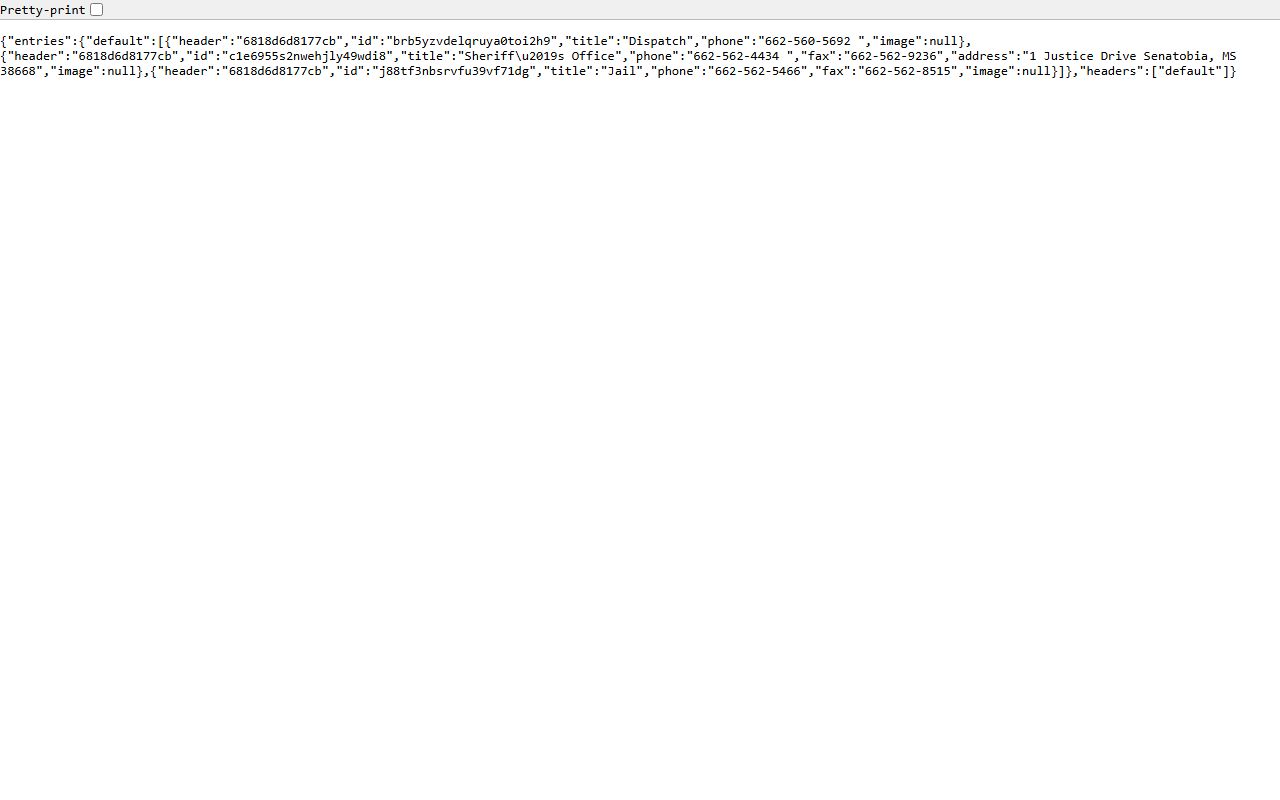
Those phone lines are the fastest way to confirm whether a recent arrest has reached the jail roster yet, since a booking lands there before the prosecutor files a court charge.
How to Find Tate County Arrest Records and Charges
Charges filed after a Tate County arrest are searched through Mississippi Electronic Courts, the statewide case system known as MEC or PAMEC. Circuit Court felony charges and many civil filings sit there. Access is not free or anonymous. Users register, accept the terms, and pay a small annual fee before viewing non-restricted case documents and dockets. Booking detail, by contrast, shows up first on the sheriff's jail roster.
- Open the MEC case registration page and sign in or set up an account as an Attorney, Non-Attorney, or Firm Administrator.
- Pick the correct court environment, which is the 17th Circuit District for felony charges and the 3rd Chancery District for equity matters.
- Search by the defendant's name or by the case number.
- Open the case and read each charge, its code, its level, and its current status.
The Tate County Sheriff's Office runs its roster and arrest tools through an official mobile app, built on a published web manifest.
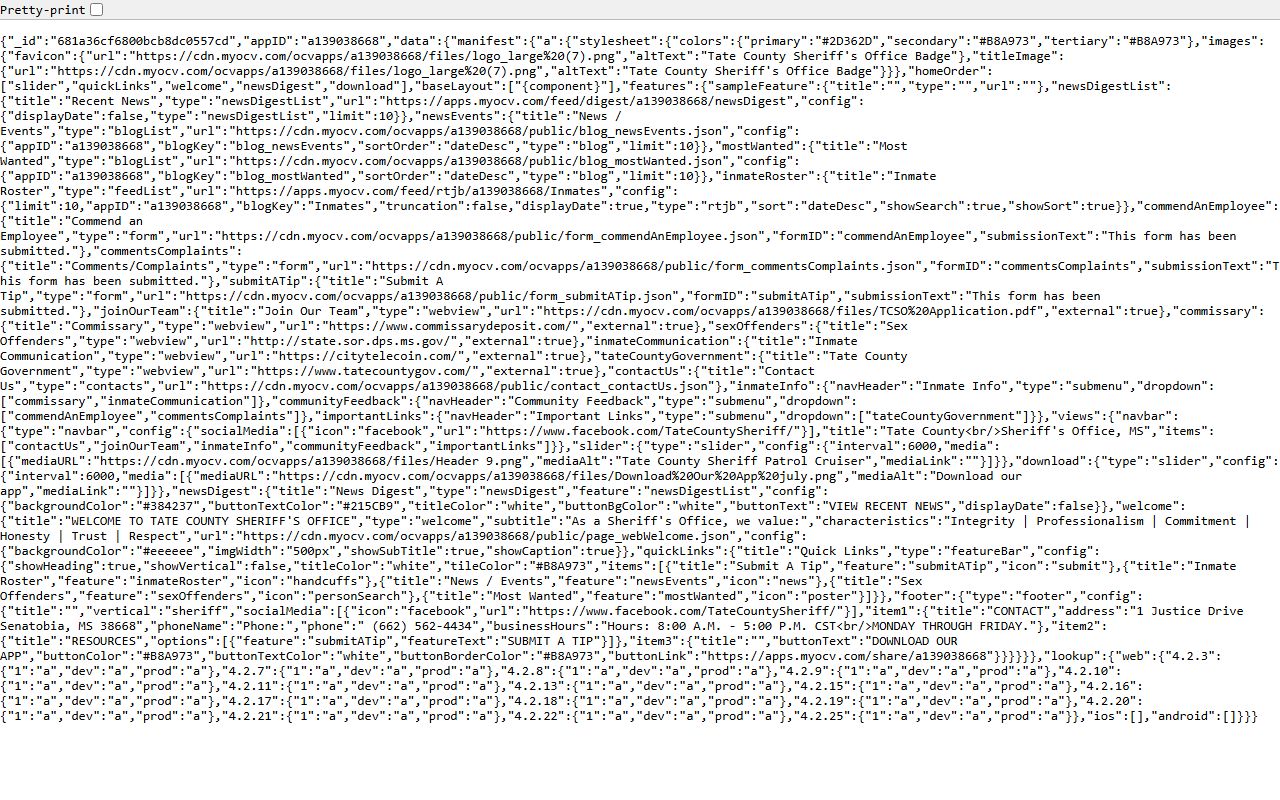
The same data powers the public jail roster, so a booking often appears there before the matching court charge is formally filed. Statewide criminal history rolls up separately from any single county case, through the state systems covered further below.
Not every charge lands in MEC. Misdemeanor charges from a county arrest often run through Tate County Justice Court at 103 Preston McKay Drive in Senatobia, reachable at 662-562-7626. City citations and ordinance charges go to the Senatobia or Coldwater Municipal Court instead. None of those lower courts post a public online case search, so the charge record is checked by phone or in person. For records that are not online anywhere, a written public-records request to the Chancery Clerk is the formal fallback.
How Tate County Charges Get Filed After an Arrest
An arrest alone does not start a Tate County court case. The charge record opens when someone files a charging document. Mississippi uses three main types, and the right one depends on the offense level and the court. A misdemeanor often starts with a complaint or affidavit. A felony usually moves toward an indictment.
The District Attorney drives felony charging. Jay Hale serves as the District Attorney for District 17, which covers Tate, Panola, Tallahatchie, and Yalobusha counties. After an arrest and any preliminary or initial appearance, a felony can go to a grand jury. The grand jury weighs the evidence and votes on an indictment. The Circuit Clerk, Kenda Blount, receives and files those indictments in Circuit Court.
| Complaint | Information | Indictment | |
|---|---|---|---|
| Filed By | Officer / Prosecutor | Prosecutor | Grand Jury |
| Common For | Misdemeanors | Some felonies | Serious felonies |
| Timing | Near the arrest | After review | After grand jury |
Charge Status in Tate County Court Records
Charges rarely stay frozen. As a Tate County case moves, charges can be amended, reduced, added, dropped, or dismissed. The court record tracks each change with a status. Reading that status correctly matters. An old charge listing may no longer reflect where the case stands today.
Some terms cause confusion. A dismissed charge ends without a conviction. A nolle prosequi means the prosecutor chose not to pursue the charge for now. Neither one is a finding of guilt. Both can leave a trace in older records until a court removes them.
Circuit Court dockets add their own short flags next to a charge. The 17th Circuit case system uses markers such as Arraignment Pending, Bound Over, Bench Warrant Issued, and Capias Pending. Each one signals a stage in the case rather than a final outcome. A bound-over flag, for example, means a lower court sent a felony matter forward toward a grand jury. Reading these flags alongside the charge status gives a clearer picture than the charge text alone.
| Status | What It Means |
|---|---|
| Pending | The charge is filed and the case is still open and active. |
| Amended / Reduced | The charge was changed, often to a lesser offense, by motion or agreement. |
| Dismissed | The court dropped the charge, closing it without a conviction. |
| Nolle Prosequi | The prosecutor set the charge aside and chose not to pursue it. |
Note: A dropped or dismissed charge can still appear in older records until an expungement order removes it from ordinary public view.
Charges vs. Convictions
Being charged is not the same as being convicted. A Tate County arrest record and a filed charge both show an accusation, not proof of guilt. A conviction comes only after a guilty plea or a verdict. The full case file, with the plea, the disposition, and any sentence, sits in the county criminal court records.
This gap matters when reading Tate County arrest records. A person may be booked, charged, and later cleared, yet the arrest can still surface in early records. The charge proves only that a prosecutor saw probable cause. It does not settle guilt, which the court decides at the end of the case.
| Charge | Conviction | |
|---|---|---|
| Stage | Accusation | Verdict or plea |
| Burden of Proof | Probable cause | Beyond reasonable doubt |
| Public Record | Yes | Yes |
Sealed vs. Expunged Records
Some charge records leave public view. Mississippi law lets certain cases be sealed or expunged, and the two are not the same. A sealed record is hidden from ordinary public access. An expunged record is treated as though the charge never happened. Expungement under Mississippi Code Section 99-19-71 reaches qualifying arrests, dismissed cases, not-guilty outcomes, and some first-offense convictions.
| Sealed | Expunged | |
|---|---|---|
| Visibility | Hidden from public | Destroyed / treated as never existed |
| Law Enforcement | Limited access | Very limited |
| Eligibility | Set by court order or statute | Dismissals, not-guilty, qualifying first offenses |
Eligibility turns on the offense, the prior record, and waiting periods set by statute. A Tate County resident seeking an expungement files in the court that handled the case and asks the judge for an order. Once the order is signed, certified copies usually go to the agencies holding the record so it clears from their systems too.
Tate County Charge Codes and Severity
Every charge ties back to a statute. A Tate County charge listing usually shows the code in parentheses next to the charge text. The code points to the exact Mississippi law a person is accused of breaking. Reading the code tells you the offense and often the level.
The sheriff's official inmate roster feed lists each booking charge with its statute reference in plain text. A driving-under-the-influence charge may cite 63-11-30B. A simple assault charge may cite 97-3-7. Property crimes such as false pretense can cite 97-17-41, and a drug charge may cite 41-29-139D.
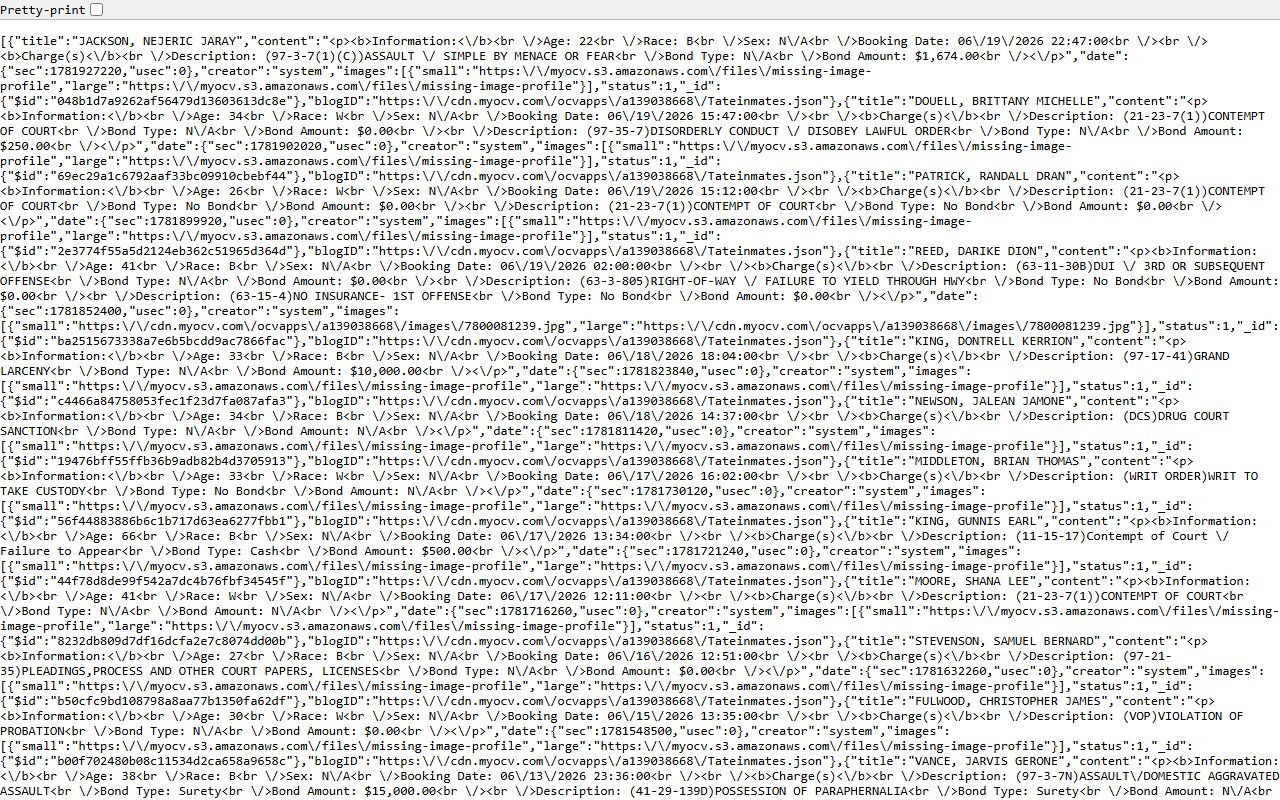
Those codes match the statutes a prosecutor later cites when filing the formal court charge. One arrest can produce several separate charges, each with its own code and severity. Mississippi sorts offenses mainly into felonies and misdemeanors. Felonies carry the longest possible sentences and run through Circuit Court. Misdemeanors carry lighter penalties and often start in Justice or Municipal Court. The charge level shapes which court hears the case and how serious the record looks.
Statewide Charge and Criminal History Lookups
A single county case is only part of a person's record. Statewide systems gather charges and outcomes from across Mississippi. They help when an arrest leads to state prison, or when a charge involves a registrable offense.
Sentenced felons move from the county jail into state custody, searchable through the Mississippi Department of Corrections inmate search.

That search is the right fallback once a person no longer appears on the county jail roster. Certain charges feed a public safety registry rather than a custody list.
Convictions for qualifying sex offenses appear on the Mississippi sex offender registry run by the Department of Public Safety.
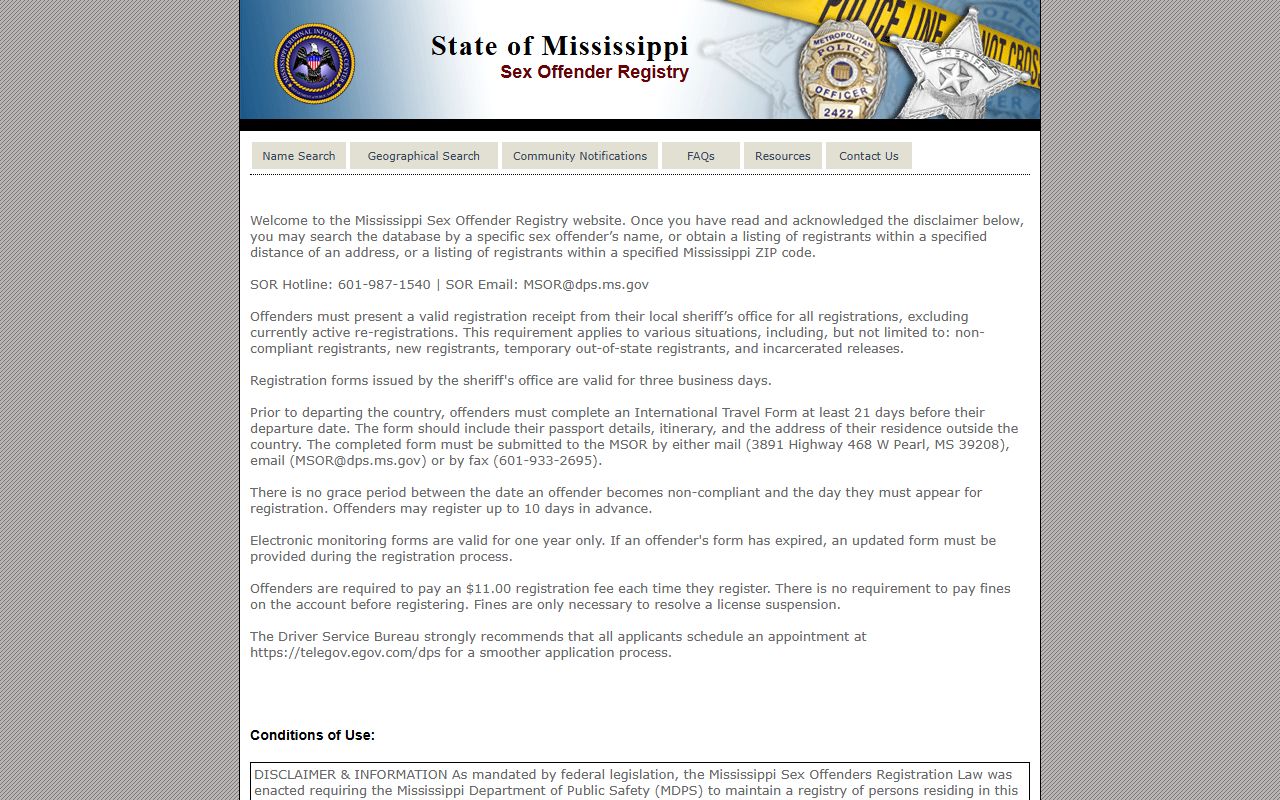
The registry is statewide, so it captures offenders no matter which county filed the original charge. Between the corrections search and the registry, a Tate County charge can be traced well past the local jail.
Background Checks on Tate County Records
Looking up a charge out of curiosity is not the same as a formal background check. Employers, landlords, and licensing bodies that screen people must follow the federal Fair Credit Reporting Act. That law sets rules on accuracy, consent, and how charge information may be used. A casual public-record search carries no such duties, but it also carries no legal weight for those decisions.
Important: Tate County Court Records is not an FCRA-regulated consumer reporting agency, and its information cannot be used for employment, housing, credit, or licensing screening.
Restricted Charge Records in Tate County
Not every Tate County charge record is open. Some are held back by law. Juvenile charges are confidential under Mississippi Code Section 43-21-261, so youth-court matters do not appear in ordinary public searches. Sealed and expunged charges drop out of public access once a court orders it. Active investigations and certain sensitive filings may also be withheld until a case resolves.
Mississippi's Public Records Act under Section 25-61-1 keeps most court records open, yet it bends to these limits. A charge that was dismissed or expunged may simply not show up, even though it once existed. When a record cannot be found online, the clerk's counter and a written public-records request are the next steps.