
How to Search Tate County Court Records
The main online tool for Tate County court records is Mississippi Electronic Courts, known as MEC. The public side of the system is reached through PAMEC. Circuit Court and Chancery Court files in Tate County both run on MEC. Felony cases, large civil suits, and appeals sit in the Circuit Court file. Divorce, probate, guardianship, commitment, and juvenile matters sit in the Chancery Court file. PAMEC is not a free, open search box. A user must register, accept the terms, and pay an annual fee before viewing non-restricted case documents, docket sheets, and notices.
Before you start, gather the names of the parties or the case number if you have it. Decide which court likely holds the record. The registration page asks each new user to pick a user type and then walk through the account steps. Paying online usually opens access the same day, while a mailed check delays access until it clears.
You can open the public registration screen at the PAMEC online registration page to begin an account.
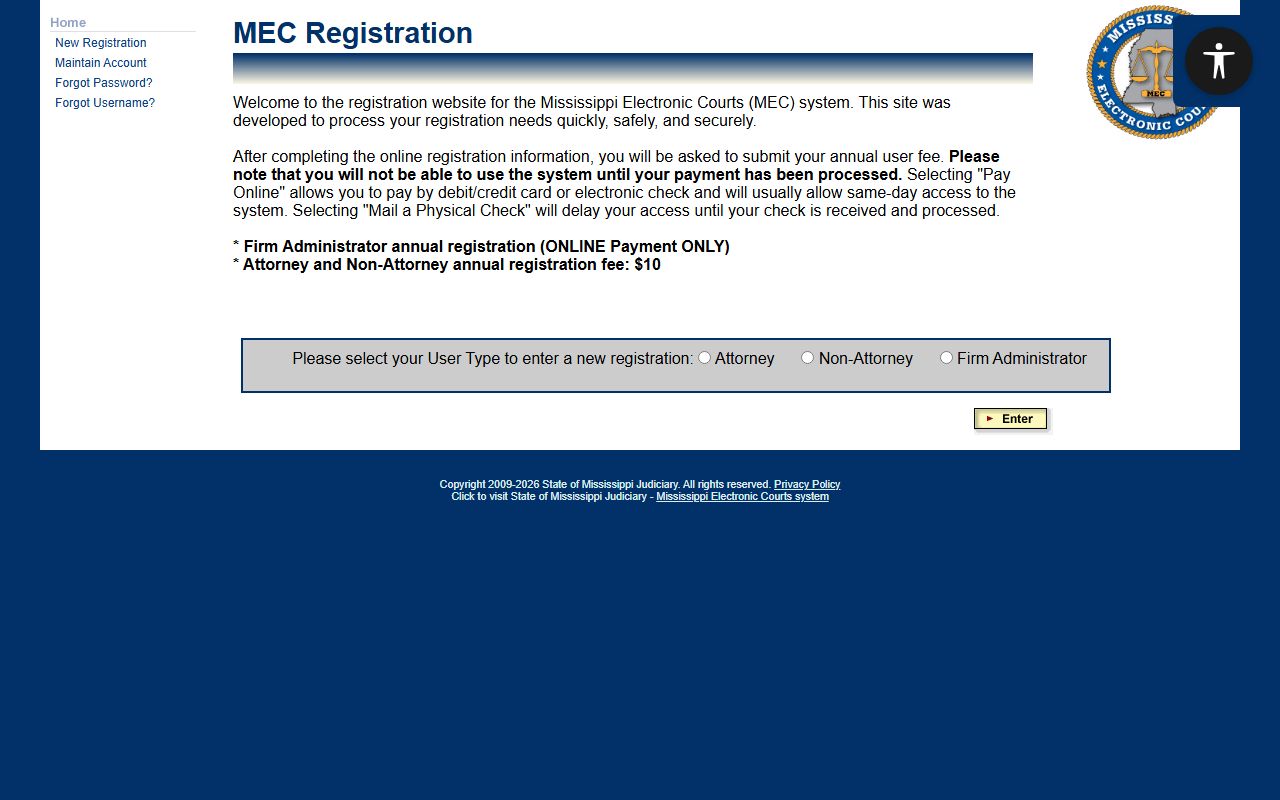
That screen sets the user type and starts the workflow that later unlocks Tate County Circuit and Chancery case data. The numbered steps below show the full path from picking a court to reaching the right clerk.
- Identify the court. Felonies and civil suits of $200,000 or more belong to Circuit Court. Divorce, probate, guardianship, and commitment belong to Chancery Court. Small claims up to $3,500, county misdemeanors, and county traffic belong to Justice Court. City traffic and city ordinance cases belong to a municipal court.
- Register for PAMEC. Choose Attorney, Non-Attorney, or Firm Administrator, then pay the annual fee. Online payment usually grants same-day access.
- Open the correct MEC environment. Tate County Circuit Court records sit in the Seventeenth Circuit District system. Tate County Chancery Court records sit in the Third Chancery District system.
- Use the free public terminals for files that are not online. The Chancery Clerk's office offers terminals for Chancery Court records and land records at no charge.
- Ask the clerk for certified copies. Divorce decrees come from the Chancery Clerk. Marriage records come from the Circuit Clerk.
- Contact the lower courts directly for their files. Reach Tate County Justice Court at 662-562-7626 for small claims, county traffic, and warrant records. Reach the city courts in Senatobia or Coldwater for municipal cases.
- File a public information request for county records that are not posted online. Submit the form to Tim Hale, Chancery Court Clerk, at the courthouse.
Tate County Court Records Search Fields
The PAMEC entry screen keeps the public fields short. The most important choice is the user type, set with a radio button. Existing users sign in or recover a lost login through links on the same page. After the account is active, the case search inside each court environment opens up with party, case-number, and date options. The table below lists the fields a new or returning user meets at the registration gate.
| Field Label | Type | Required | Notes / Format |
|---|---|---|---|
| User Type | Radio button | Yes | Attorney, Non-Attorney, or Firm Administrator. The page shows an error if no type is picked. |
| Enter | Image button | No | Moves the selected user type into the registration workflow. |
| Login / Maintain Account | Link | No | Existing PAMEC users sign in and update account details. |
| Forgot Password? | Link | No | Resets a lost password for a current account. |
| Forgot Username? | Link | No | Recovers a lost username for a current account. |
The fee and billing rules sit in the access terms rather than on the search box. You can read them on the PAMEC non-attorney terms page before you register.
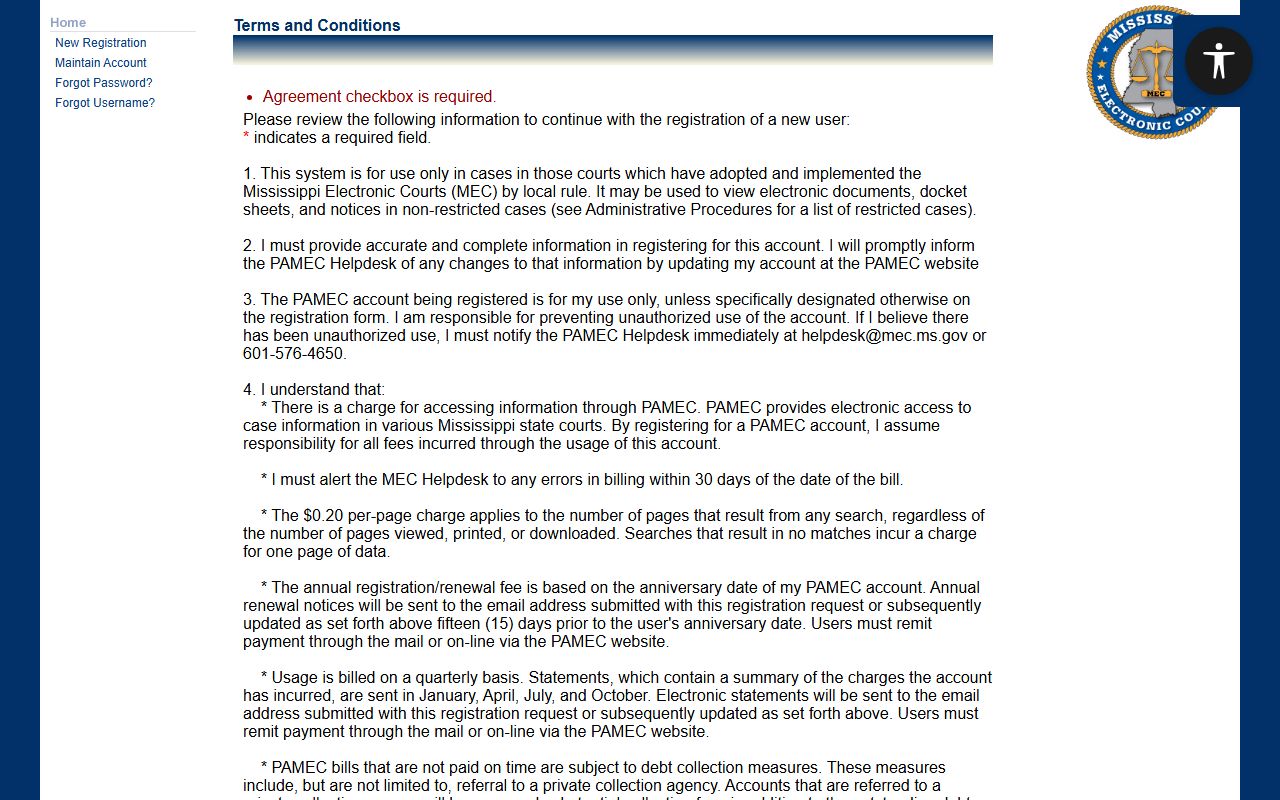
Those terms set a charge of twenty cents per page returned by a search, even when a search finds no match. They also confirm quarterly billing, so the cost side of a Tate County court records search is clear up front.
Types of Tate County Court Records
Tate County court records span several courts, and each court produces its own file types. The split follows Mississippi's trial-court design. Circuit Court keeps the law-side files. Chancery Court keeps the equity-side files. Justice Court and the city courts keep the smaller cases. Sorting a record by court first makes the search faster and the request cleaner.
Circuit Court files include civil suits over the dollar threshold and the full felony record, from indictment through sentence. Chancery Court files include divorce, support and custody, probate, guardianship, and commitment. Justice Court files include small claims, county misdemeanors, and county traffic. Common record types are listed below.
- Civil Circuit Court records, such as complaints, answers, motions, judgments, and appeal notices.
- Criminal Circuit Court records, such as indictments, arraignment entries, plea petitions, verdicts, and sentencing orders.
- Chancery divorce and family records, including decrees, support orders, and custody filings.
- Probate and guardianship records, including wills, letters, inventories, and accountings.
- Justice Court small claims, misdemeanor, county traffic, and warrant records.
- Marriage records held by the Circuit Clerk and land records held by the Chancery Clerk.
Chancery dockets carry their own status flags, which help readers track probate and guardianship files. You can view the live court details on the Third Chancery District MEC court information page.
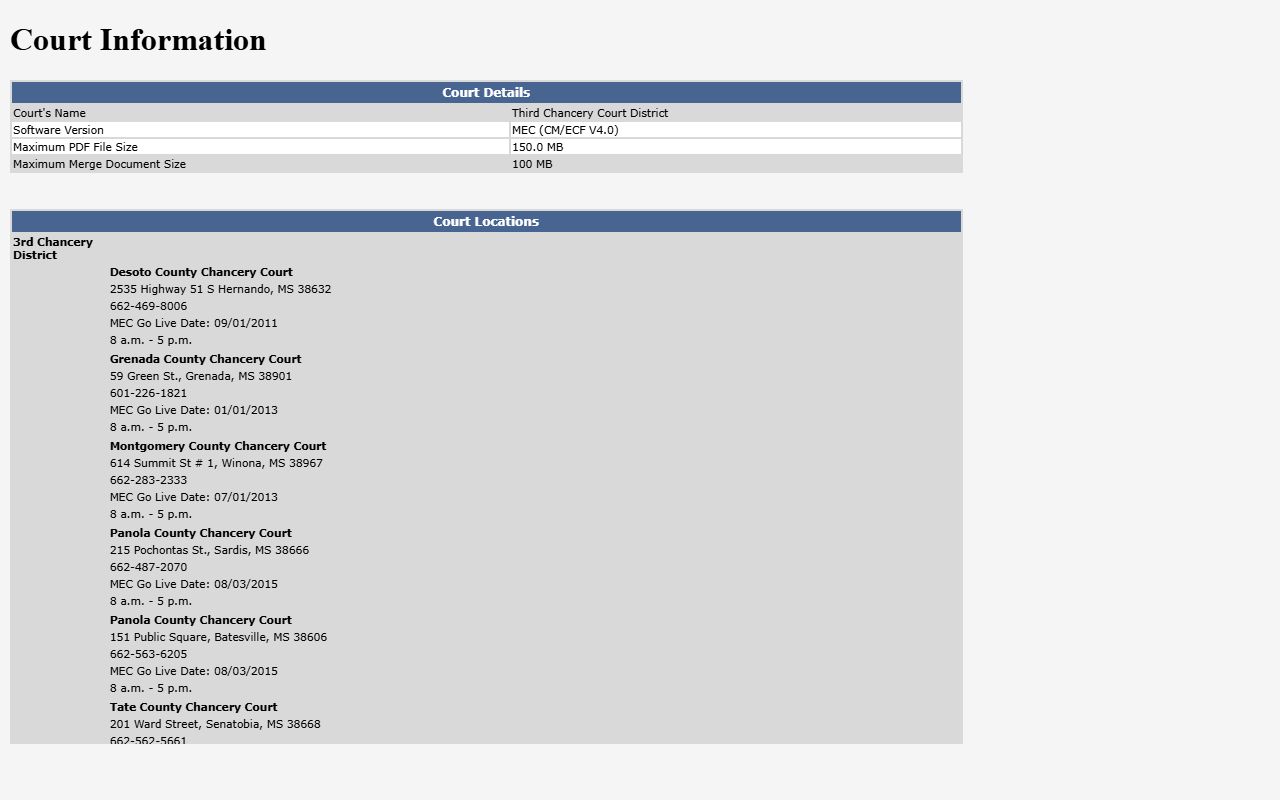
That page lists the Tate County Chancery Court address and hours, the MEC go-live date, and flag terms like Accounting Filed and Adult Ward that mark probate cases.
Land records and board minutes are not case files, yet many public-record users search them often. The county keeps land records online and at public terminals. Copies printed from the web portal carry a watermark. You can reach the land system through the RecordsUS land-record portal to look up deeds and property documents.
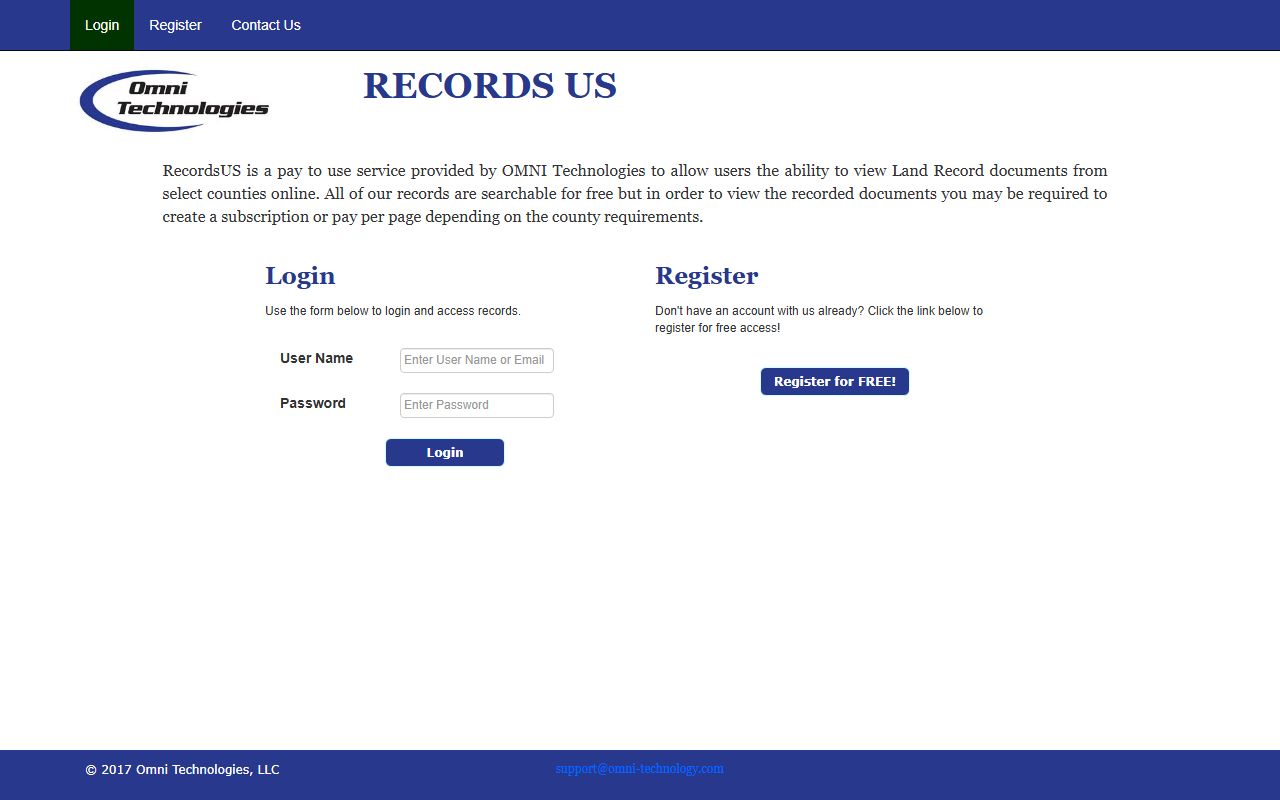
Searches on that portal are free, while full document images may require a subscription or a per-page fee. For property history tied to a chancery case, the land records and the court file often work together.
What Tate County Court Records Show
A Tate County court record holds more than a name and a date. It tracks the case from filing to final order. The exact fields shift with the court and the case type, but the core layout stays steady across civil, criminal, and family files. The table below maps the common fields to what each one tells a reader.
| Field | What It Shows |
|---|---|
| Court and District | The court that holds the file, such as the Seventeenth Circuit, the Third Chancery District, or Tate County Justice Court. |
| Case Number | The court's assigned number for the file, used to pull every related document. |
| Filing Date | The date the case opened with the clerk; booking records add a date and time. |
| Parties | Plaintiff and defendant in civil cases, State and defendant in criminal cases, petitioner and respondent in family and probate matters. |
| Docket Entries | Motions, orders, notices, hearings, pleas, judgments, and flags like bench warrant or capias. |
| Judge | The chancellor, circuit judge, justice court judge, or municipal judge handling the case. |
| Disposition | The outcome of a charge or case, such as a verdict, plea, dismissal, or final decree. |
| Financial Fields | Court costs, fines, bonds, restitution, and copy or certification fees with payment status. |
The Circuit Court side uses its own set of docket flags. You can see them on the Seventeenth Circuit District MEC court information page, which serves Tate County.
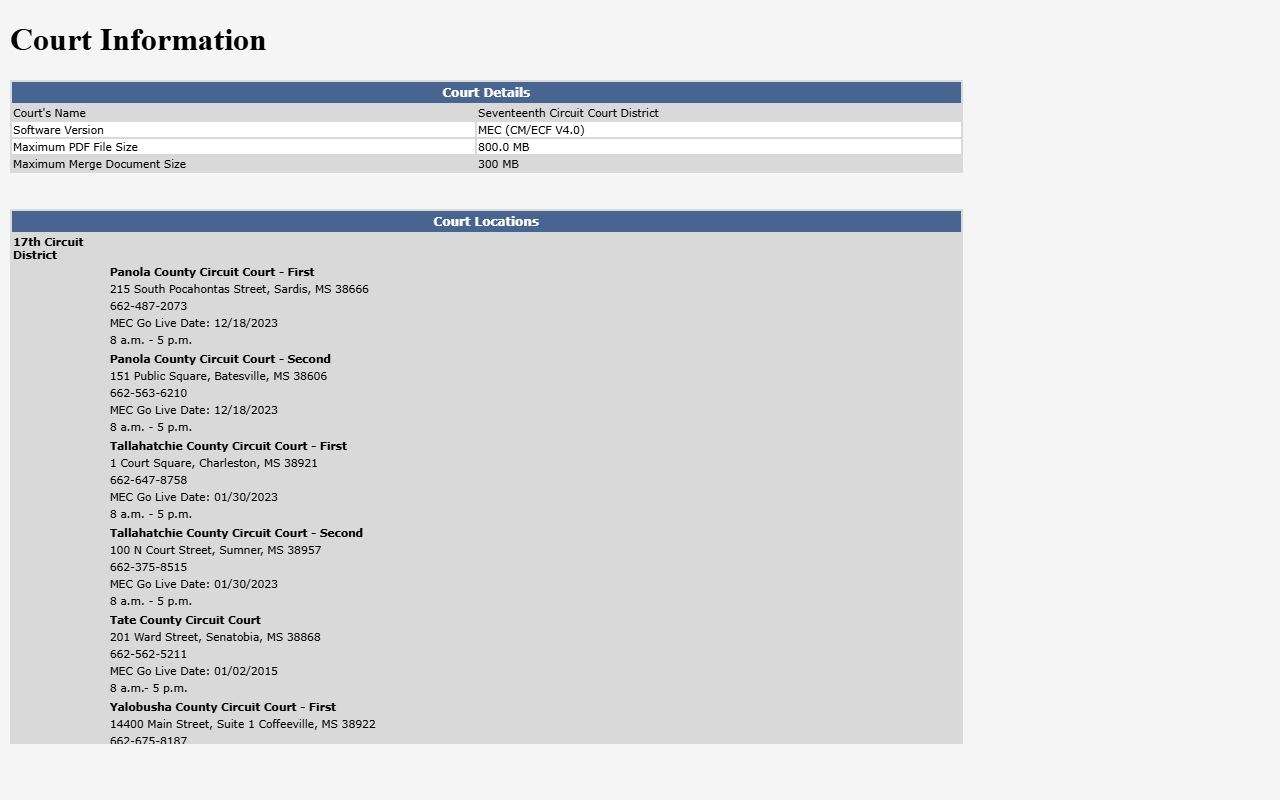
Listed flags such as Arraignment Pending, Bench Warrant Issued, Bound Over, and Capias Pending give a quick read on where a criminal file stands. The docket text supplies the rest of the story.
Court files also redact or hold back sensitive items. Social Security numbers, financial account numbers, minor children's identifying details, and medical information are removed or restricted. A docket can confirm a record exists without showing every page to the public.
Public Access Framework for Tate County Court Records
Mississippi treats most court files as open records. The state's policy comes from the Mississippi Public Records Act, set out in Miss. Code Section 25-61-1. It says public records must stay open for inspection unless another law shields them, and that moving records onto computers must not erode that access. In practice, the office that owns the record controls how the public reaches it. County agencies may ask for a written request and may charge actual costs for search, copies, and mailing when the law allows.
Access in Tate County runs through the office that holds the file. Circuit and Chancery case records open through PAMEC or in-person clerk terminals, with restricted cases pulled from public view. Divorce decrees, probate, guardianship, board minutes, and land records run through the Chancery Clerk. Criminal and civil Circuit cases plus marriage licenses run through the Circuit Clerk. Justice Court and municipal records need a direct call or visit to the lower court. For county records not already posted online, the Public Information Request form goes to the Chancery Court Clerk.
The state also publishes the filing and disposition forms used across the electronic system. You can browse them on the Mississippi MEC forms page for a closer look at the documents behind a case.
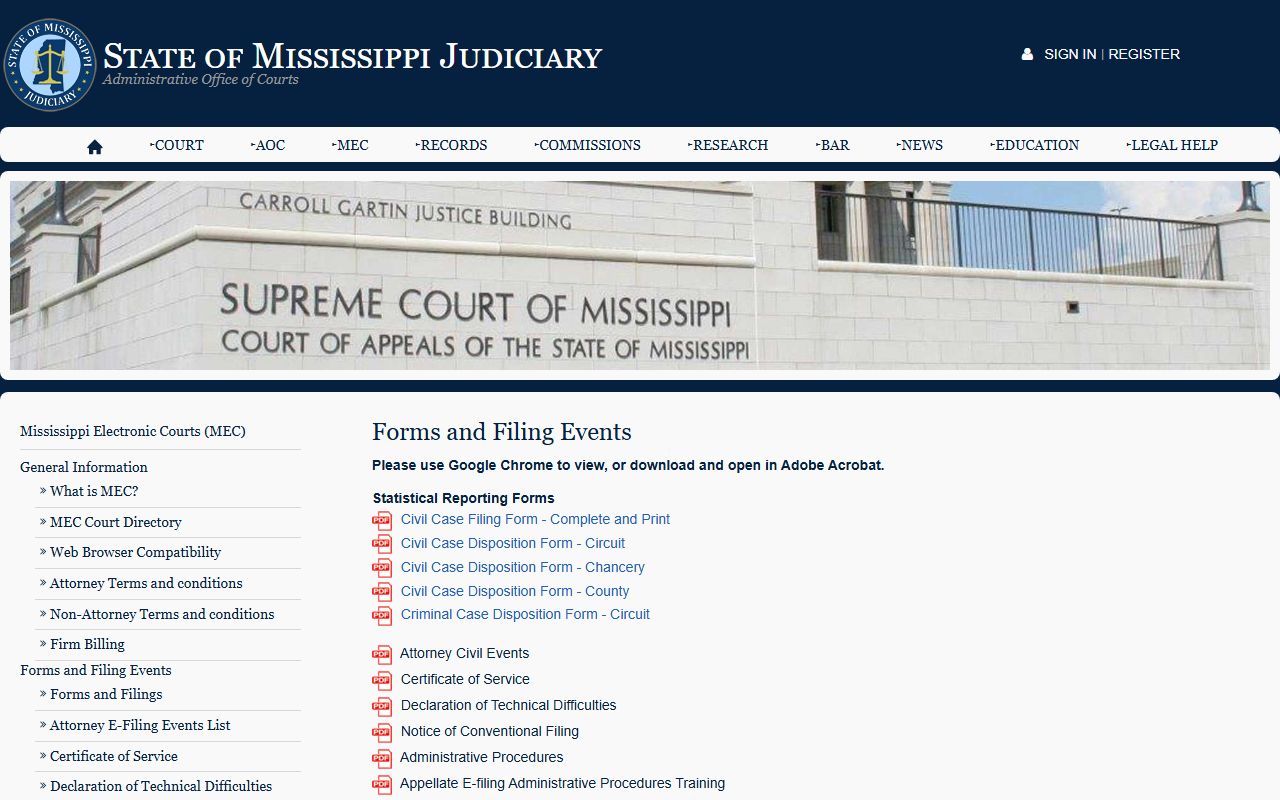
Those forms shape how a case enters and leaves the docket, which helps explain the fields a finished Tate County court records search returns.
Note: Public access is broad but not unlimited, and juvenile, sealed, adoption, mental-health, and protected identifier details stay out of ordinary public court searches.
Records That Are Sealed or Confidential in Tate County
Some Tate County court records never reach the public search. Youth-court files are confidential under Miss. Code Section 43-21-261. Juvenile delinquency, child-in-need-of-supervision, abuse, and neglect cases are not ordinary public case-search records. Adoption files are restricted, and access usually needs party status or a court order. Mental-health and commitment matters carry medical detail, so they are treated as sensitive and often closed.
Expungement can also pull a file from public view. Mississippi's expungement law, Miss. Code Section 99-19-71, lets certain arrests, dismissed cases, not-guilty outcomes, no-disposition matters, first-offense misdemeanors, and some felony convictions be removed by petition. Once a court signs an expungement order, the public should not expect the case to appear in normal clerk searches or PAMEC public access.
A resident seeking expungement starts by finding the court that handled the case. The steps below outline the general path under state law.
- Identify the court of conviction or the court that handled the dismissed charge, since a Justice Court misdemeanor, a municipal case, and a Circuit felony may file in different places.
- Check eligibility under Section 99-19-71, where the outcome, offense type, prior record, and waiting period all matter.
- File the petition in the court with jurisdiction and pay any filing fee the court charges.
- Ask the judge for an order expunging the record, then send certified copies to the agencies that hold it.
Clerks cannot give legal advice on these filings. Tate County points residents to Mississippi Access to Justice, North Mississippi Rural Legal Services, and Mississippi Legal Services for help. Court dockets in the county track these stages, and the broader case history appears in the Tate County criminal court records file once a case opens.
In-Person Court Record Requests
Not every record sits online, and some users prefer to work at the counter. The courthouse is in downtown Senatobia, the county seat along Interstate 55. The Circuit Clerk handles county and circuit case files, marriage licenses, and professional licenses. The Chancery Clerk, on the first floor, handles chancery cases, divorce decrees, probate, board minutes, and land records, and reach that office at 662-562-5661. Bring names, dates, and any case number, and be ready to pay copy and certification fees. The public terminals let visitors look up Chancery Court records and land records without a PAMEC account.
Tate County Circuit Clerk
201 South Ward Street
Senatobia, MS 38668
662-562-5211
Mon-Fri 8:00 a.m. to 5:00 p.m.
Mailed requests should include the correct payment and a self-addressed stamped envelope. When the page count or total fee is unclear, a quick call to the office before mailing saves a return trip.