
What Is a Tate County Court Docket
A court docket is a dated index of everything that happens in a case. The clerk adds a new line each time a paper is filed or a judge acts. Each line names the event, the date, and often the party who filed it. The docket does not hold the full text of those papers. It points to them. In plain terms, the docket is the table of contents for a case file.
Dockets in Tate County come from several courts. Circuit Court keeps dockets for felony cases and large civil suits. Chancery Court keeps them for divorce, probate, and guardianship. Justice Court and the two city courts track smaller matters. A single docket entry can record a motion, an order, a notice, a hearing, a plea, a judgment, or a continuance. Bench warrant, capias, bond, and appeal entries also show up. Reading the docket tells you where a case stands without opening every document.
Court dockets stay open to the public under the Mississippi Public Records Act, whose policy appears in the bill text for Miss. Code Section 25-61-1.
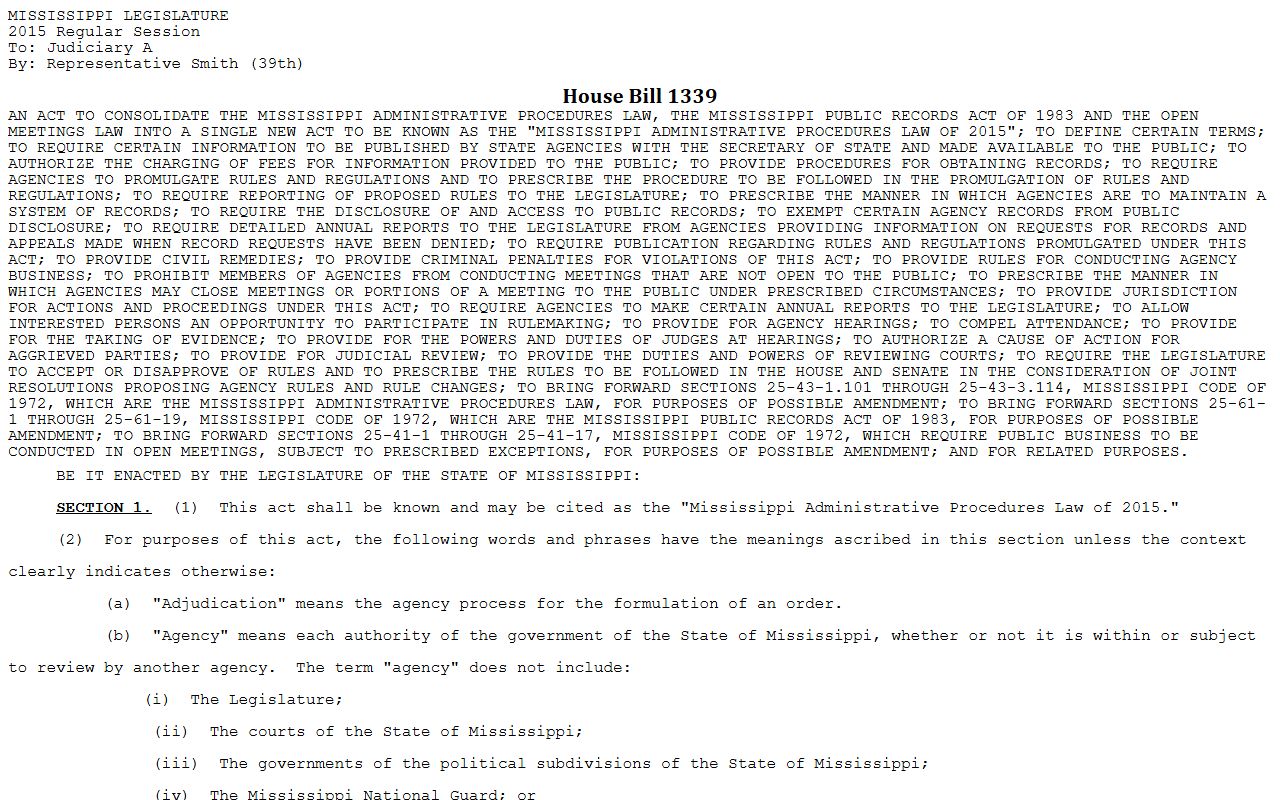
That open-records policy is the reason most Tate County court dockets can be read at the courthouse or pulled through the state e-filing system. Sealed and youth-court entries are the main exceptions.
How to Find Tate County Dockets in MEC
Most Tate County trial dockets live in Mississippi Electronic Courts, the state e-filing system known as MEC. The public side is called PAMEC. It is not a free open search. A user registers, pays a small annual fee, and accepts the terms before viewing docket sheets in cases that are not restricted. Circuit Court cases sit in the 17th Circuit District system. Chancery Court cases sit in the 3rd Chancery District system.
- Register at the PAMEC registration page and choose Attorney, Non-Attorney, or Firm Administrator. Pay the annual fee; online payment usually opens access the same day.
- Pick the right court. Use the 17th Circuit District environment for felony and civil Circuit cases, and the 3rd Chancery District environment for divorce, probate, and guardianship.
- Search by party name or case number, then open the docket sheet for the case you want.
- Read the entries from top to bottom, and open any linked document that is public.
PAMEC charges twenty cents per page returned by a search, even when no match comes back. Billing runs every quarter. Anyone who would rather skip an account can use the free public terminals in the clerk's office instead. Those terminals reach the same Chancery dockets and land records.
Sample Tate County Docket Entry
Every docket sheet is built from short, dated lines. Reading one line at a time keeps a long case easy to follow. A typical Tate County docket entry tells you the date, the event, the party behind it, and where the document sits. The field table below breaks a single entry into its parts.
| Field | What It Shows |
|---|---|
| Entry Date | The day the clerk logged the filing or the day the judge acted. |
| Event Type | The kind of action, such as a motion, order, notice, hearing, plea, judgment, or continuance. |
| Party Filing | The side that filed, named as plaintiff, defendant, petitioner, respondent, or the State. |
| Judge or Officer | The chancellor, circuit judge, or other judicial officer who signed or heard the matter. |
| Document Link | A link to the underlying pleading or order when the case is public and the file is online. |
| Hearing or Setting | A future court date, time, and sometimes the courtroom for an upcoming hearing. |
Criminal dockets add charge and status lines, such as arraignment, bond, capias, and sentencing. Chancery dockets add probate steps like the filing of an accounting. The vocabulary changes by court, but the layout stays the same.
Courts That Publish Dockets in Tate County
Not every Tate County court posts its docket online. Circuit Court and Chancery Court ride on MEC, so their docket sheets reach the public through PAMEC and the courthouse terminals. Justice Court and the two municipal courts keep their records on local systems. For those courts, a phone call or a counter visit is the way to check a docket or a court date.
- Tate County Circuit Court: felony and large civil dockets, online through the 17th Circuit MEC system.
- Tate County Chancery Court: divorce, probate, and guardianship dockets, online through the 3rd Chancery MEC system.
- Tate County Justice Court: small claims, misdemeanors, and county traffic; no online docket, so call 662-562-7626.
- Senatobia Municipal Court: city traffic and ordinance cases; call 662-562-5057.
- Coldwater Municipal Court: city cases heard the second Thursday of each month at 9:00 a.m.; call 662-622-7241.
The two city courts follow the limited role the state sets for a Mississippi municipal court, which hears city ordinance violations, city traffic, and misdemeanors.
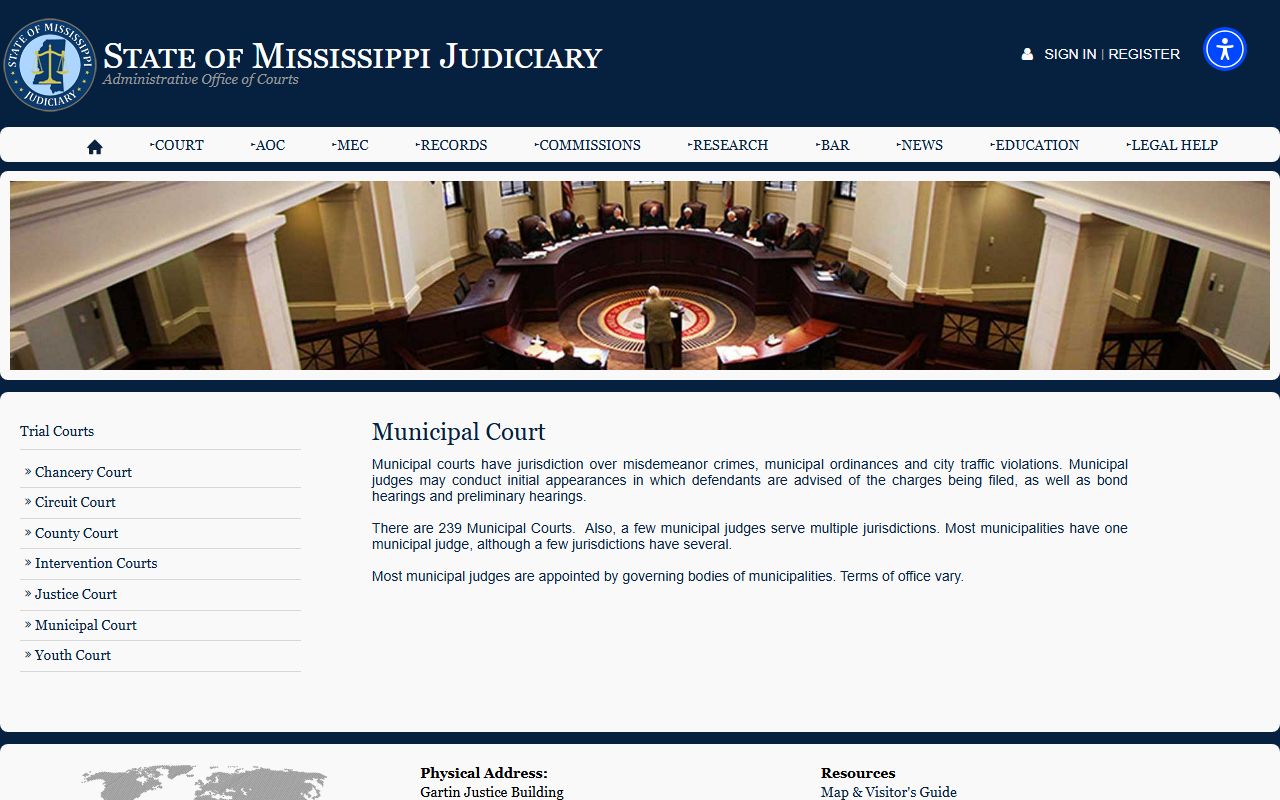
Because city dockets are not searchable online, the deputy court clerk in each town is the fastest way to confirm a Senatobia or Coldwater court date.
MEC Docket Flags in Tate County
MEC marks cases with status flags that appear on or near the docket. The flags work as a quick read on where a case stands. Circuit Court and Chancery Court use different sets. The court-information pages for each district list the meanings, and the most common ones are translated below.
| Flag | Court | Plain Meaning |
|---|---|---|
| Appeal | Circuit | The case has gone up to a higher court for review. |
| Arraignment Pending | Circuit | The defendant still needs to be formally read the charges and enter a plea. |
| Bench Warrant Issued | Circuit | A judge has ordered an arrest, often after a missed court date. |
| Bench Warrant Returned | Circuit | That warrant has been served or otherwise cleared. |
| Bound Over | Circuit | A lower court has sent a felony matter up for grand-jury or trial action. |
| Capias Pending | Circuit | A writ for arrest is open, usually after a failure to appear or comply. |
| Accounting Filed - Order Due | Chancery | An estate or guardianship accounting is in, and the court still owes an order on it. |
| Adult Ward | Chancery | The case involves an adult under guardianship or conservatorship. |
Note: Flags speed up a docket review, but they are summaries, so the full entry text and any linked order still control what actually happened in the case.
Court Calendar and Case Docket
A court calendar and a case docket are not the same thing. A calendar is a forward-looking schedule. It lists the hearings a court will hold on a given day, grouped by date and courtroom. A docket looks backward and inward at one case. It records what already happened, line by line, from the first filing onward.
Both have a place in a Tate County docket search. The county courts page links public court-calendar resources, which help a party learn when court next meets. The case docket then shows how that party's own matter has moved. One answers when to show up; the other answers what the court has done.
Note: A court date listed on a calendar can change, so confirm any setting against the case docket or with the clerk before traveling to the courthouse.
Docket vs. Full Case Record
The docket is a list of events. The full case record is the stack of documents behind those events. A docket entry might read that an order was signed; the full record holds the order itself, with its findings and signatures. For deep review, a reader needs the documents, and a complete picture of every filing lives in the broader set of Tate County court records.
| Docket | Full Case Record | |
|---|---|---|
| Format | List of dated entries | Full pleadings, orders, and exhibits |
| Access | Often online through MEC or a clerk terminal | May require a per-page fee or certified copy |
| Use | Track case progress and status | Legal review, evidence, and appeals |
For a quick status check, the docket is enough. For a court filing or an appeal, the documents matter, and certified copies come from the clerk who holds the case.
Restricted Tate County Docket Entries
Public access to dockets is broad, but it is not total. Some matters are shielded by law, and their entries either do not appear in a public search or appear only in a redacted form. Youth-court matters are the clearest example. Under Miss. Code Section 43-21-261, youth-court records are confidential and are not released except as the law specifically allows.
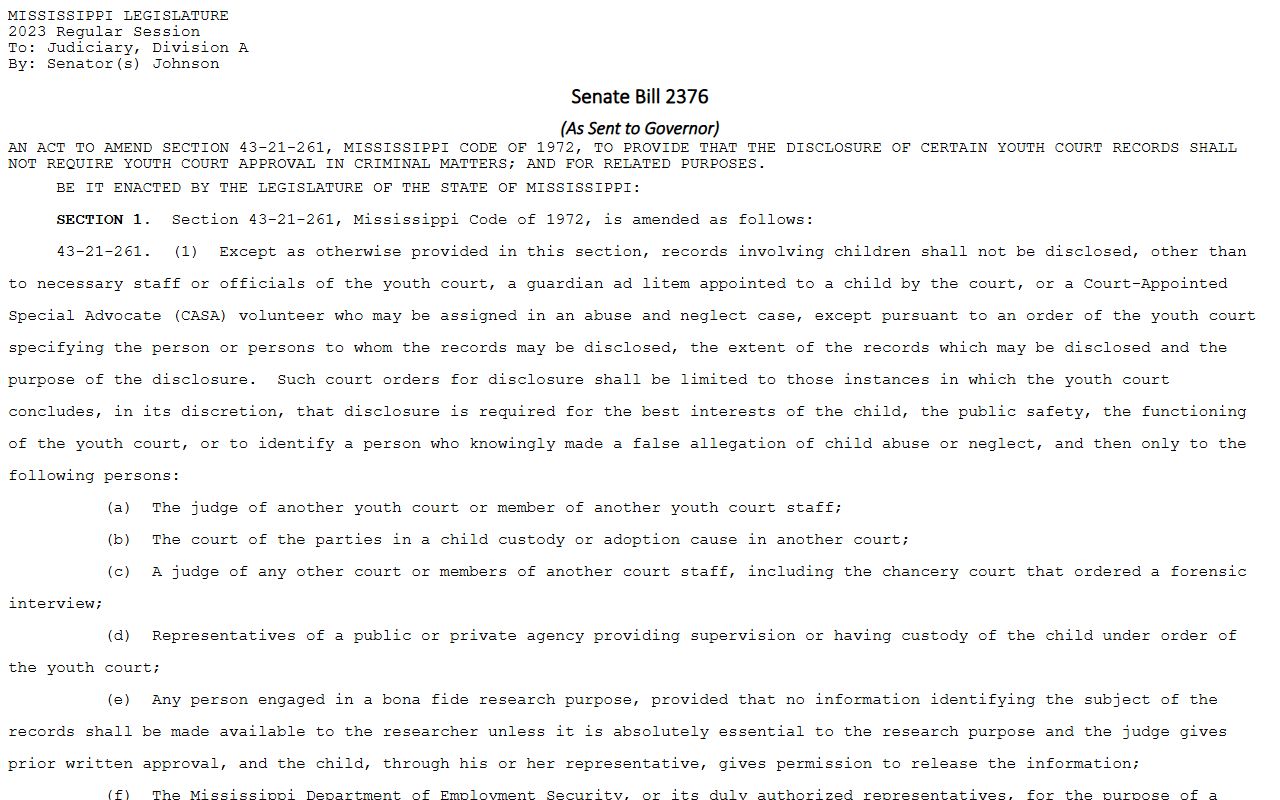
Delinquency, child-in-need-of-supervision, abuse, and neglect cases fall under that shield, so they are not ordinary public docket entries. A few terms help explain how other restrictions work on a docket.
- Sealed record
- A file hidden from ordinary public view by law or court order.
- Expunged record
- An eligible case removed from public access, so it should not show in normal searches.
- Redacted field
- A document where sensitive data, such as a Social Security number, is blacked out.
- Confidential matter
- A case type, such as youth court or adoption, that the law keeps closed.
Expungement runs on its own statute. The eligibility rules and categories appear in the bill text for Miss. Code Section 99-19-71.
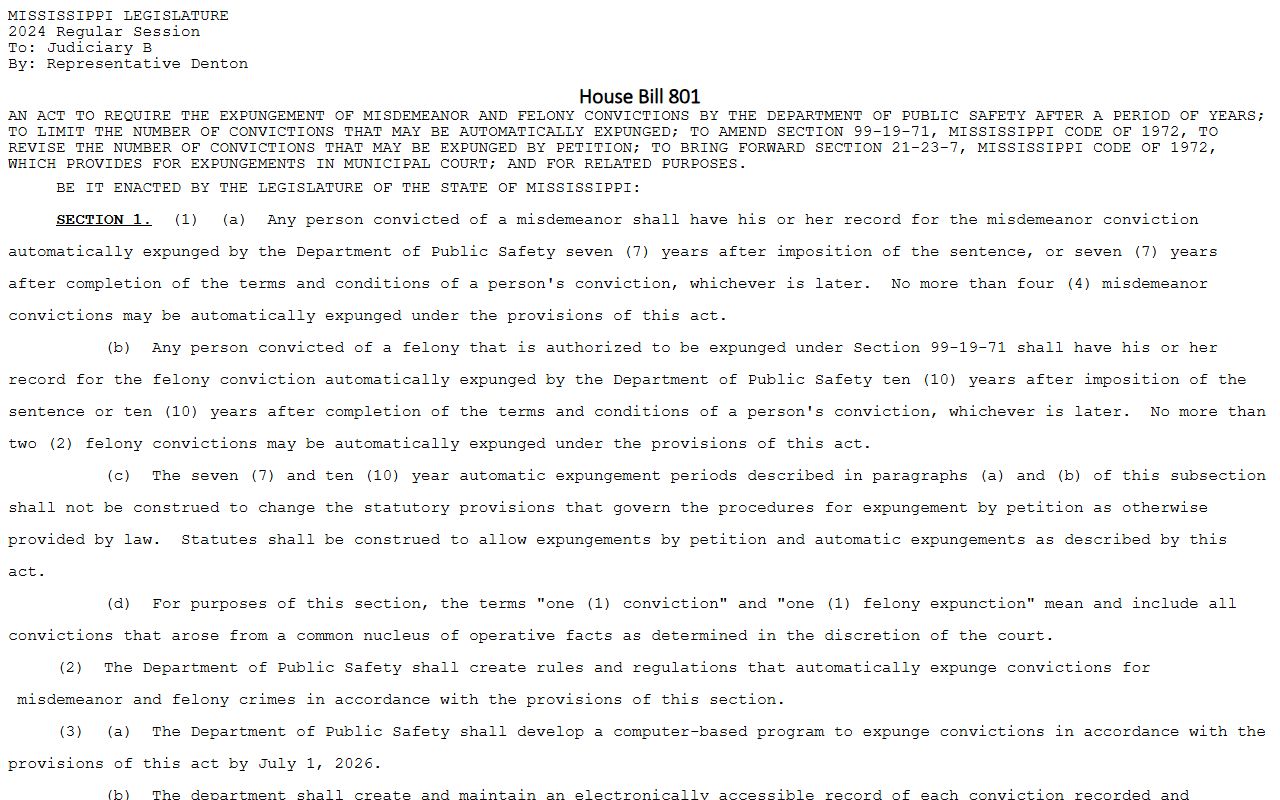
Once a court grants an expungement, the case should drop out of normal clerk searches and PAMEC public access. Dismissed charges, not-guilty outcomes, and some first-offense convictions may qualify by petition.
Public Terminals and Clerk Access
The courthouse offers a no-account path to many dockets. The Chancery Clerk keeps free public terminals for Chancery Court records and land records, so a visitor can search and print without a PAMEC login. The clerk's staff can also help identify a case, locate an older file, or produce a certified copy that an online docket cannot.
Each clerk holds a different set of dockets. Circuit and county civil and criminal cases run through the Circuit Clerk, Kenda Blount. Chancery cases, including divorce, probate, and guardianship, run through the Chancery Clerk, Tim Hale, at 662-562-5661. Both offices sit in the Tate County Courthouse in downtown Senatobia. For a Justice Court or municipal docket, the local court remains the place to call.
Tate County Circuit Clerk
201 South Ward Street
Senatobia, MS 38668
662-562-5211
Monday to Friday, 8:00 a.m. to 5:00 p.m.
The Circuit Clerk also issues marriage licenses and keeps voter and professional-license records, while the clerk who owns a case is the one to ask for certified docket copies. More on each office and its fees sits with the Tate County Circuit Clerk resources.